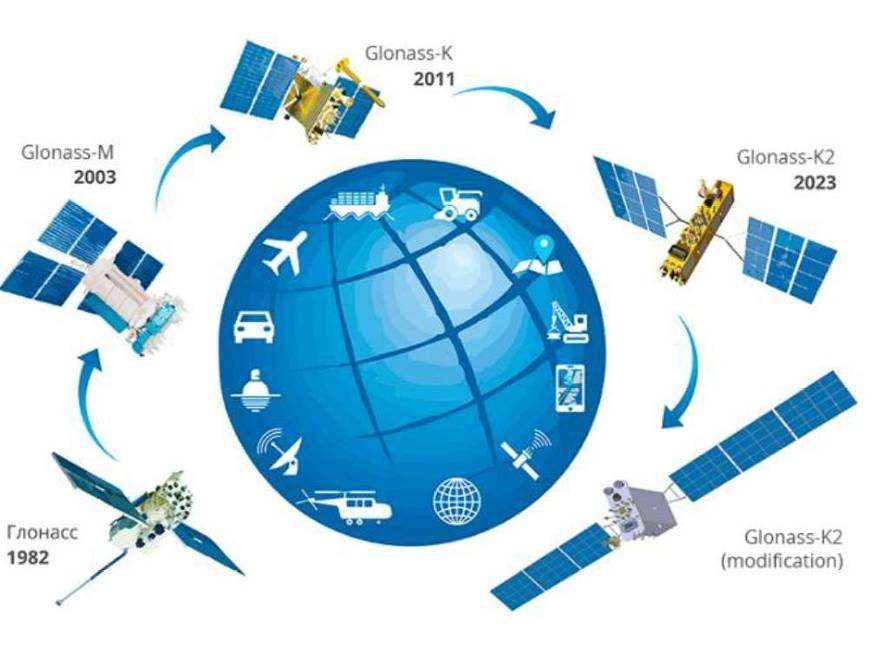


Global Navigation Satellite Systems (GNSS) have become a critical dependency for modern civilian and defense platforms, enabling precise positioning, navigation, and timing (PNT) for applications ranging from autonomous vehicles and unmanned aerial systems to maritime navigation, telecommunications, and critical infrastructure timing. As reliance on GNSS continues to grow, these systems have increasingly become strategic targets for intentional radio-frequency (RF) interference, including both jamming and spoofing attacks.
Traditional GNSS protection approaches, often limited to single-frequency operation, are no longer sufficient to guarantee reliable navigation performance in complex and contested RF environments. Modern threat scenarios frequently involve multi-band, wideband, and multi-source interference, requiring more advanced spatial mitigation techniques to ensure continuous PNT availability.
This article introduces a triple-band GNSS CRPA architecture designed to deliver simultaneous anti-jam protection across the L1, L2, and L5 frequency bands by combining the complementary capabilities of the HEDGE-8008 and HEDGE-4008 platforms.
Download Technical Document
For a detailed technical breakdown of the system architecture, RF design, and performance analysis, you can download the full technical document below.
🔗 Download PDF – Triple-Band GNSS CRPA Solution
1. System Overview
The proposed triple-band GNSS CRPA architecture is designed to provide independent and simultaneous spatial interference mitigation across the L1, L2, and L5 GNSS frequency bands while maintaining compatibility with a wide range of external multi-band GNSS navigation receivers.
This is achieved by deploying two independent CRPA subsystems, each optimized for specific frequency bands, and combining their interference-mitigated RF outputs into a unified multi-band signal. Spatial anti-jam processing is fully decoupled from the GNSS navigation receiver, allowing end-users to integrate any professional-grade all-band GNSS receiver without modification.
The architecture enables adaptive beamforming and spatial nulling on each frequency band independently, ensuring robust performance even in the presence of wideband or cross-band interference. The resulting solution is scalable, platform-independent, and capable of maintaining GNSS availability under complex RF threat conditions.
2. Multi-Band CRPA Architecture
The triple-band solution leverages the strengths of two complementary CRPA platforms:
HEDGE-8008 provides high-order spatial nulling for the L1 band using an 8-element, 8-channel architecture. It is optimized for dense interference environments and supports up to seven independent adaptive nulls, enabling strong suppression of intentional and unintentional interferers in the upper GNSS band.
HEDGE-4008 delivers dual-band spatial processing for the L2 and L5 frequency bands using independent adaptive beamforming paths. This allows simultaneous mitigation of interference on wideband GNSS signals while preserving modulation fidelity and signal integrity.
Each frequency band is processed using fully independent RF paths, digitizers, and adaptive beamforming engines. This strict separation ensures that interference on one band does not degrade performance on others, eliminating algorithmic coupling and preserving consistent anti-jam performance across the entire GNSS spectrum.
3. Preservation of Signal Fidelity
Modern GNSS constellations increasingly rely on wideband, high-integrity signals such as GPS L5, Galileo E5a/E5b, and BeiDou B2a/B2b, which offer improved multipath resistance and enhanced ranging accuracy. The proposed architecture is designed not only to mitigate interference but also to preserve the intrinsic modulation characteristics of these signals.
Low group delay variation and high linearity are maintained throughout the RF and digital front-end, ensuring compatibility with advanced GNSS receiver techniques such as long coherent integrations, precise code-phase tracking, and dual-frequency ionospheric correction. This preservation of signal fidelity is essential for high-precision and safety-critical navigation applications.
4. GNSS Signal Availability and Spectral Diversity
A key advantage of the triple-band CRPA architecture is its ability to exploit spectral diversity across multiple GNSS frequency bands. In contrast to single-band solutions, where navigation performance is limited to a single spectral region, the triple-band configuration allows each satellite to contribute multiple independent measurements.
This increased measurement diversity improves satellite geometry, reduces dilution of precision (DOP), and enhances overall PVT solution stability. Stronger pilot channels available on L5 and E5 signals further improve receiver tracking performance, particularly in degraded RF conditions.
5. Performance Under Interference
Single-band GNSS systems operating exclusively on L1/E1/B1 are especially vulnerable to intentional interference, as this band remains the most heavily targeted due to its widespread adoption and legacy dominance. When L1 signals are fully jammed, traditional systems experience immediate loss of navigation capability, requiring jammer removal and full reacquisition to recover.
The proposed triple-band CRPA architecture addresses this limitation by maintaining independent spatially filtered L2 and L5 signal paths. In scenarios where L1 is completely denied, the external GNSS receiver can continue operating using lower-band measurements without interruption. This capability preserves PVT continuity and significantly increases navigation resilience in contested RF environments.
6. Form Factor and Platform Integration
Despite its advanced spatial processing capabilities, the complete triple-band CRPA solution is designed to remain compact and lightweight. The integrated assembly maintains a total mass below 575 grams and fits within a 90 × 180 × 26 mm mechanical envelope.
This SWaP-optimized design enables deployment on platforms traditionally constrained to single-band or low-performance anti-jam solutions, including small and medium-sized UAVs, UGVs, compact ground vehicles, and portable GNSS timing systems. The reduced physical footprint also simplifies mechanical integration and improves system survivability through reduced cross-sectional exposure.
7. Conclusion
The triple-band GNSS CRPA architecture presented in this article provides a robust and scalable solution for ensuring reliable PNT in dynamic and interference-dense RF environments. By combining the high-order spatial nulling capabilities of HEDGE-8008 with the dual-band processing strength of HEDGE-4008, the system delivers independent anti-jam protection across all major modern GNSS frequency bands.
The architecture preserves signal fidelity, maintains navigation continuity under complete L1-band denial, and enables seamless integration with existing professional-grade GNSS receivers. Its compact form factor and modular design ensure long-term scalability and compatibility with evolving GNSS constellations and emerging RF threat models.
This approach represents a system-level evolution in GNSS anti-jam technology, enabling next-generation platforms to operate with confidence in contested electromagnetic environments.