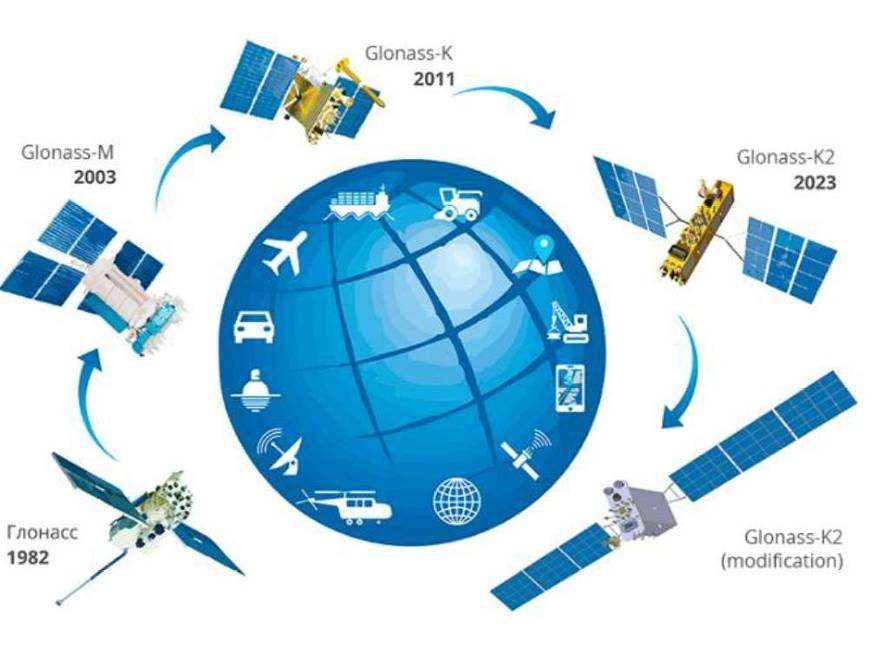


Global Navigation Satellite Systems (GNSS) have become an indispensable component of modern civilian, industrial, and defense platforms, supporting applications ranging from autonomous vehicles and unmanned aerial systems to maritime navigation, telecommunications, critical infrastructure timing, and precision-guided technologies.
As dependence on GNSS positioning, navigation, and timing (PNT) continues to increase, these systems are becoming increasingly exposed to intentional radio-frequency (RF) interference, including jamming and spoofing. Modern RF threats are evolving toward multi-band, wideband, and multi-source interference scenarios, creating challenges for conventional single-band anti-jam architectures.
The HEDGE-8016 Multi-Band CRPA architecture addresses these challenges by providing independent spatial interference mitigation across the L1, L2, and L5 GNSS frequency bands. By combining multi-element antenna arrays with adaptive digital beamforming, the system can form deep spatial nulls toward interference sources while preserving desired satellite signals.
1. System Overview
The HEDGE-8016 is a multi-band GNSS CRPA architecture designed to provide independent and simultaneous spatial interference mitigation across the L1, L2, and L5 frequency bands while maintaining compatibility with external professional-grade multi-band GNSS receivers.
The architecture is available in two multi-band configurations:
HEDGE-8016 8+8 Multi-Band CRPA
L1 + L5 or L1 + L2
HEDGE-8016 8+4+4 Multi-Band CRPA
L1 + L2 + L5
The 8+8 configuration provides up to seven independent adaptive nulls on the primary processed band, while the 8+4+4 configuration provides up to seven independent nulls on L1 and up to three independent nulls on both L2 and L5.
Each GNSS band is processed through independent RF paths, digitizers, and adaptive beamforming engines. This architectural separation prevents interference on one frequency band from introducing algorithmic coupling or performance degradation on other bands.
The interference-mitigated outputs are subsequently combined into a unified multi-band RF signal that can be provided to an external GNSS navigation receiver.
This approach separates the spatial anti-jam function from the navigation engine itself, enabling flexible integration with professional-grade multi-band GNSS receivers without requiring modifications to their acquisition or tracking algorithms.
2. Multi-Band CRPA Architecture
The HEDGE-8016 architecture is designed to address RF environments where interference may occur simultaneously across multiple GNSS frequency bands.
The 8+8 configuration supports either L1 + L5 or L1 + L2 operation and is optimized for high-order spatial nulling and dense interference environments. The system supports GNSS signals including GPS L1C, L1C/A, L2C, and L5, Galileo E1 and E5a, and BeiDou B1C, B1I, and B2a.
The 8+4+4 configuration extends the architecture to simultaneous L1, L2, and L5 processing. It provides independent adaptive spatial processing across all three frequency bands, with up to seven independent nulls on L1 and up to three independent nulls per band on L2 and L5.
This independent processing architecture allows the HEDGE-8016 to maintain spatial interference mitigation even when interference characteristics vary significantly between frequency bands.
By separating the RF and digital processing chains, the architecture provides a scalable foundation for future GNSS signal and interference mitigation requirements.
3. Wideband GNSS Signal Reception and Modulation Fidelity
Modern GNSS constellations increasingly rely on wideband signals in the L2 and L5 frequency ranges to improve ranging performance, multipath resistance, and interference resilience.
The HEDGE-8016 lower-band subsystem is designed to process a range of wideband GNSS signals, including:
- GPS L2C and L2P(Y) at 1227.6 MHz with approximately 20 MHz bandwidth
- GPS L5 at 1176.45 MHz with 10 MHz bandwidth
- Galileo E5a at 1176.45 MHz with a total 20 MHz bandwidth
- BeiDou B2a around 1176 MHz
These signals use different modulation schemes, including BPSK and BOC-based waveforms. The RF and digital receive chains are designed to maintain low group-delay variation and high linearity throughout the signal-processing path.
Preserving waveform fidelity is particularly important for GNSS receivers using advanced processing techniques such as precise code and carrier-phase tracking, long coherent integration, and dual-frequency ionospheric correction.
The HEDGE-8016 therefore combines spatial interference mitigation with signal-fidelity preservation, allowing modern wideband GNSS signals to be protected without unnecessarily degrading their intrinsic characteristics.
4. SWaP-Optimized Multi-Band Integration
A key design objective of the HEDGE-8016 is to deliver high-performance multi-band interference mitigation within a compact mechanical envelope.
This is particularly important for airborne, ground, and unmanned platforms where size, weight, and power (SWaP) constraints directly influence system integration.
The HEDGE-8016-S130 is designed to remain below:
- Mass: 720 g
- Mechanical envelope: 130 × 130 × 28 mm
The HEDGE-8016-C200 is designed to remain below:
- Mass: 1320 g
- Mechanical envelope: Ø200 × 38 mm
By integrating the spatial processing and RF reconstruction hardware into compact assemblies, the HEDGE-8016 reduces platform-level wiring complexity and simplifies mechanical integration.
This compact architecture enables multi-band CRPA protection to be deployed on platforms that may previously have been constrained to single-band or lower-performance anti-jam solutions.
5. Multi-Band Interference Mitigation
The HEDGE-8016 was designed to operate in complex RF environments where multiple interference sources may be distributed across different spatial directions.
The experimental evaluation was conducted using a simulated multi-directional interference environment while maintaining a fixed CRPA and GNSS receiver configuration.
During the evaluation, the average received interference power at the Device Under Test (DUT) was maintained within approximately −58 ± 2 dBm to provide consistent and repeatable test conditions.
The evaluation also considered a band-dominant interference scenario in which the L1 signal was strongly suppressed.
This scenario demonstrates an important benefit of multi-band GNSS reception: when severe interference affects one GNSS frequency band, another protected frequency band can remain available to support positioning.
The architecture therefore provides an additional layer of resilience beyond spatial nulling alone by combining spatial diversity with frequency diversity.
6. GNSS Positioning Performance Under Interference
The positioning performance of the HEDGE-8016 was initially evaluated under interference-free conditions to establish a baseline for subsequent interference testing.
Under no-jam conditions, the evaluated multi-band configuration achieved:
- 2D positioning accuracy: 41 cm
- 3D positioning accuracy: 75 cm
The system was subsequently evaluated under seven spatially distributed interference sources targeting the L1 band.
With an average received interference level of approximately −50 dBm, the resulting positioning performance was measured at:
- 2D positioning accuracy: 61 cm
- 3D positioning accuracy: 116 cm
These measurements demonstrate the ability of the multi-band CRPA architecture to maintain positioning performance under severe L1-band interference while continuing to exploit available GNSS signals in other protected frequency bands.
The results also illustrate the value of maintaining independent multi-band processing rather than relying exclusively on a single GNSS frequency.
7. Multi-Platform Deployment
The combination of multi-band reception, adaptive spatial filtering, and compact mechanical integration makes the HEDGE-8016 suitable for a wide range of GNSS-dependent platforms.
Potential integration environments include:
- Unmanned Aerial Vehicles (UAVs)
- Unmanned Ground Vehicles (UGVs)
- Compact maritime platforms
- Autonomous vehicles
- Ground-based navigation systems
- Mission-critical positioning platforms
- Precision navigation and timing systems
The compact S130 form factor is particularly suited to SWaP-constrained platforms where antenna and electronics integration space is limited.
The C200 configuration provides an alternative mechanical architecture for applications requiring the corresponding multi-band CRPA configuration and integration envelope.
8. Scalable Architecture for Future GNSS Threats
The HEDGE-8016 architecture separates spatial interference mitigation from the external GNSS navigation receiver.
This modular approach allows the CRPA front-end to evolve independently as GNSS receiver technologies, beamforming algorithms, RF front-end designs, and interference threats continue to develop.
Independent processing across L1, L2, and L5 also provides a foundation for supporting evolving GNSS constellations and increasingly complex RF interference scenarios.
The architecture is designed to preserve a stable integration interface while allowing future enhancements to the internal signal-processing chain.
This scalability is particularly important for platforms expected to remain operational over long service lifecycles, where GNSS signal structures and RF threat environments may change over time.
9. Conclusion
The HEDGE-8016 Multi-Band CRPA architecture provides a scalable approach to protecting GNSS positioning, navigation, and timing in contested and interference-dense RF environments.
With support for 8+8 L1/L5 or L1/L2 configurations and an 8+4+4 L1/L2/L5 configuration, the architecture provides independent spatial interference mitigation across multiple GNSS frequency bands.
Its combination of adaptive beamforming, independent RF processing paths, wideband signal preservation, and compact mechanical integration enables reliable multi-band GNSS operation while maintaining compatibility with professional-grade external navigation receivers.
Experimental evaluation further demonstrates the ability of the architecture to maintain positioning performance under severe L1-band interference, highlighting the value of combining spatial anti-jam processing with multi-band signal diversity.
With the HEDGE-8016-S130 and HEDGE-8016-C200 form factors, the architecture provides flexible integration options for UAVs, UGVs, maritime systems, autonomous platforms, and other GNSS-dependent applications operating in challenging RF environments.
The HEDGE-8016 represents a modular and scalable approach to next-generation GNSS interference mitigation, providing a foundation for resilient PNT performance as RF environments become increasingly complex.